The Sound Over the Rooftops Begins With a Wet Rope and a Biscuit Tin: A Tuesday Night Up the Tower
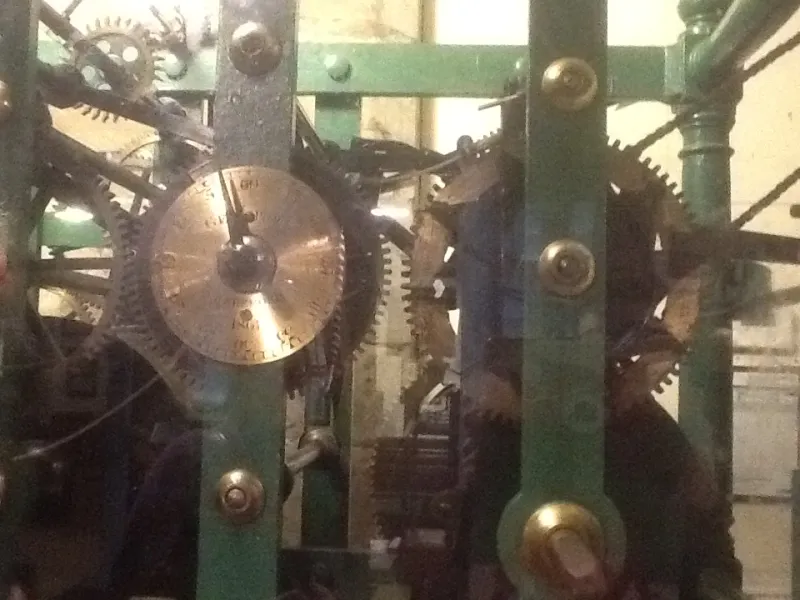
Photo: DylanMusto14 , CC BY-SA 2.0, via Wikimedia Commons
The first thing you notice is not the bells. It is the stairs. A narrow spiral, a handrail polished by generations of palms, and a smell of cold stone and old carpet that tells you this is not a concert hall. On a wet Tuesday in November, six of us are climbing to a room the size of a generous cupboard to make a noise that will drift over the rooftops and make somebody in the Co-op car park look up and say, without thinking, 'Hark at that.'
That is the odd bargain of church bell ringing. The product is lovely. The process is a group of ordinary people in ordinary clothes, standing in a circle, pulling ropes and trying not to be the one who makes the whole thing sound like a lorry dropping a crate of saucepans.
The climb before the sound
The tower is not heated. Or if it is, nobody has told the tower. There is a radiator in the ringing room that makes a noise like a man clearing his throat and gives off roughly the warmth of a polite memory. We arrive in coats, peel off the wettest layers, and hang them on the back of a chair that has clearly been in the tower since before any of us were born.
The ropes come down through holes in the ceiling, each one with a coloured woolly section called a sally. They look friendly. They are not friendly. They are a set of physical instructions, and if you read them wrong, everybody knows.
Before anyone rings anything, there is the ritual of the ropes: checking the coils, adjusting the stays, and a quiet conversation about who is going to stand where. It is a bit like a very polite version of picking teams, except the teams are fixed by the bells and the method and the fact that Janet has a bad shoulder and cannot ring the tenor tonight.
Ropes, sallies and the art of not being early
We start with rounds. That is the simplest thing you can do: each bell ringing in order, one after another, down the scale and back up again. On paper, it is almost embarrassingly basic. In practice, it is a small miracle of coordination. Six people, six ropes, one shared rhythm. The aim is not speed. The aim is to be exactly, boringly, beautifully on time.
Striking, they call it. The gap between a good band and a slightly untidy one is not usually the method. It is whether the bells sound like they belong to the same sentence. When it works, the sound has a shape. When it does not, you get that slightly seasick effect, as if the tower is leaning.
Tonight, we are working on a method. I will not pretend to explain all of it, partly because I am not qualified and partly because the names alone sound like a gardening catalogue. Plain Bob Minor. Grandsire. A bob here, a single there. The conductor calls changes, the ringers follow patterns, and somewhere in the middle of it all, the treble is supposed to lead the way like a small, noisy sheepdog.
There is a lot of standing about. That is the thing nobody tells you. Bell ringing involves long stretches of concentration, a fair amount of waiting, and sudden bursts of action. It is less 'clanging a bell for England' and more 'doing mental arithmetic with your arms while wearing a fleece'.
The treble has opinions
Tonight, the treble is not settling. The treble is the lightest bell, the one that sets the pace, and it has decided to be slightly dramatic about it. Every time we get into a rhythm, there it is, a fraction early, like a person who finishes your sentence and gets it wrong.
'That was a bit quick,' says the conductor, gently.
'That was not quick,' says the treble's ringer, who is not actually the treble, but will defend it anyway. 'That was the tenor.'
The tenor's ringer says nothing. The tenor's ringer has heard this before.
This is the real texture of a practice night: not solemn tradition, but a series of small, good-natured disagreements about timing, rope length and whether the second was late or the fourth was early. Nobody shouts. Nobody storms out. They just ring again, adjust a stay, and try to find the thing that was missing. It is oddly soothing. In a world of shouting, there is something lovely about six people solving a problem by listening harder.
The post-mortem at the bottom of the stairs
After an hour and a bit, we stop. The bells fall silent. The tower, which has been full of sound, suddenly feels very cold and very quiet. We coil the ropes, switch off the light, and clatter back down the stairs to the church hall, where the kettle is already on.
This is where the real business happens. Tea. Biscuits. A tin of something chocolatey that has been open since Sunday. The practice is reviewed with the seriousness of a cabinet meeting, except the main topics are 'that bit after the second bob' and 'does anyone know where the spare light bulb is'.
There is talk of recruitment, too. Every tower needs ringers, and every band knows it. There is a rota to fill, a wedding to cover, a Saturday wedding that will need ringing before and after, and a general sense that the craft survives on small acts of ordinary commitment: turning up, making tea, learning the next method, being patient with the person who is learning.
From the pavement, the bells sound like heritage. Up close, they are a hobby. A cold, fiddly, deeply sociable hobby, kept going by people who like a challenge and a biscuit. The sound drifts out over the rooftops, and for a moment it seems effortless. Then someone reaches for the tin and says, 'Right, same time next week?'