Six Quid, Four Rounds and a Tie-Breaker Nobody Trusts: The 2026 Pub Quiz Boom
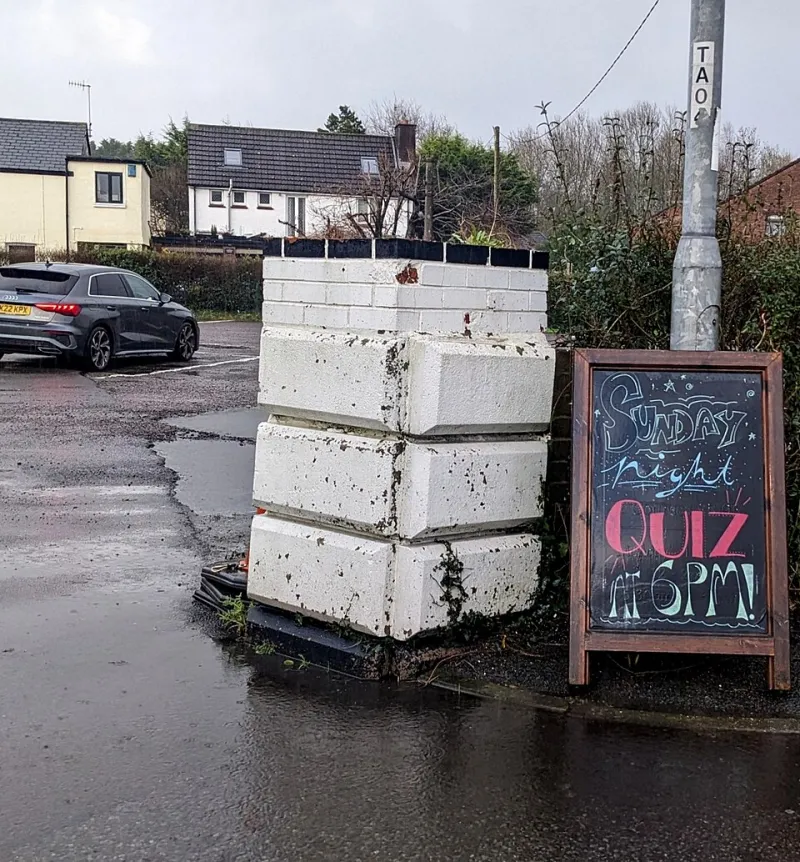
Photo: Jaggery , CC BY-SA 2.0, via Wikimedia Commons
There is a moment, somewhere around round three, when a pub quiz stops being a bit of fun and turns into a small, badly lit courtroom. Someone has produced a phone. Someone else has produced a rule about phones. The landlord is behind the bar wearing the expression of a man who has seen this exact argument every Tuesday since 2019, and the quizmaster – usually a teacher, a retired postman, or a bloke called Dave with a clipboard – is holding a handwritten sheet of A4 like it is the Magna Carta.
I love it. I have loved it for years. And in 2026 I love it a little more, because the quiz has quietly become the best-value night out in the country.
Doing the maths on a Tuesday
Entry is typically a fiver, sometimes six quid, occasionally a tenner if the landlord is feeling expansive and there is a hot-food round. A pint lands somewhere between £4.20 and £5.60 depending on whether you are in a market town or within sight of a ring road. Add a bag of crisps. Share a portion of chips at half time if the table is feeling reckless.
All in, you are looking at about £12 – and there is a live possibility you will walk out with forty quid and a meat raffle.
Set that against any other night out in 2026. Cinema ticket plus a drink. A bowl of noodles. An escape room. Even a round of bowling, once you have hired the shoes and been fleeced for a Diet Coke. The quiz wins on price every single time, and it comes with something those things cannot sell you: a table of people who have to talk to each other for two hours without a screen in the middle of it.
The Zoom quiz years left a slightly unfair smell around the format – all those frozen faces and the mute button betrayals – but what happened afterwards was more interesting. Quizzes went back into rooms and got bigger. Not slicker, you understand. Bigger.
Handwritten sheets and the tyranny of the tie-breaker
The technology has barely moved on, and that is the point. Questions are still written by a human being on a Sunday afternoon, still photocopied at slightly the wrong size, still occasionally unreadable in the picture round because someone's printer was low on ink.
That amateur quality is a feature. A quiz written by a professional question-setter tends to be fair, balanced and dull. A quiz written by a landlord's brother-in-law tends to include three questions about Lowestoft Town FC, one about a 1980s washing powder advert, and a music round that reveals his entire personality.
Then there is the tie-breaker, a genre of literature all of its own. 'Nearest to the number of bricks in Blackpool Tower.' 'Nearest to the population of Leicester.' Nobody ever knows, nobody ever agrees, and the winning team always looks faintly guilty. I have seen a grown man argue that the answer to a tie-breaker was 'not in the spirit of the quiz'. He was right. It was not. That is why it worked.
The WhatsApp league problem
Here is the 2026 development nobody saw coming: the league table.
Plenty of pubs now run a season, running from September to May, with points banked each week and a proper little trophy at the end. The league table lives in a WhatsApp group, where it is screenshotted, disputed and occasionally annotated with passive-aggressive emojis. Fixtures get rearranged. Teams ring round for ringers.
Because that is the other change. Teams have got serious about recruitment. Where once you simply brought whoever was free, you now see a table with a designated historian, a geography specialist and one person who is inexplicably good at questions about Eurovision. There is a mild trade in quiz mercenaries – students who will turn up for a free pint and a share of the winnings, drafted in like a loan signing in January.
I have no problem with any of this, as long as everyone understands it is still nonsense. The moment a pub quiz starts taking itself seriously, it stops being fun and becomes a council meeting with beer.
The etiquette, as I understand it
Every quiz has house rules, but some things are universal:
- The phone rule is absolute. If the quizmaster says phones away, phones away. The team that 'just checks the time' is never checking the time.
- Shouting out answers is a crime. Especially if you are right. Especially if you are on the table that is losing.
- Do not argue about the spelling. 'Katherine' versus 'Catherine' has ended friendships.
- Buy something. It is a pub, not a library. Two drinks minimum, and no nursing a single lime and soda through five rounds.
- The losing team clears the tables. Not a real rule, but it should be.
Starting a team from nothing
If you have never done it, the barrier to entry is roughly one text message. Pick a night. Pick a pub. Turn up and ask the landlord if there is space – there almost always is, because quizzes are perpetually short of teams in January and perpetually full in December.
Four to six is the sweet spot. Fewer and you will be exposed on the rounds you are bad at. More and you will be doing the thing where six people whisper and nobody hears the answer.
One piece of advice: do not build a team of generalists. Build a team of obsessives. My lot has somebody who knows dance music from 1994 to 2004 and somebody who can name every British prime minister's constituency. Neither of them can do the picture round. It balances out.
And if your local does not have a quiz? Offer to write one. You will be terrible at it for three weeks, then you will get the hang of it, and by the fourth week you will have discovered the true joy of the whole enterprise: watching a room full of adults go completely silent over a question about the chemical symbol for potassium.
Six quid. Two hours. No screens. Best night out in Britain, and it is happening four streets away.