Glühwein, Gravy and a Slightly Worried Santa: The Case for the Local Christmas Market
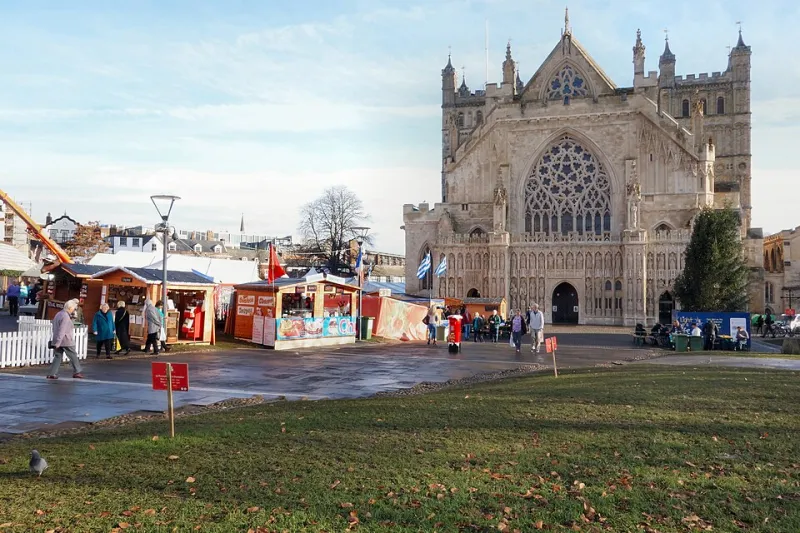
Photo: Peter Jeffery , CC BY-SA 2.0, via Wikimedia Commons
Every year around this time, someone on the internet announces the 'best' Christmas market in the UK. It will have a curated wooden village, a light trail timed to music, and a mulled wine stand that takes contactless and sells a branded mug you will lose by January. It will look magnificent in photographs. It will also be slightly soulless.
I am not against a nice market. I am against the idea that the best ones are the ones that look like they were designed by a committee with a Pinterest account. The Christmas markets I love are the ones that feel like they might not be entirely legal. The ones in a car park behind a leisure centre. The ones where the 'German sausage' stall is run by a man called Dave from Doncaster. The ones with a Santa who looks like he's been drafted in from the local pub and is not entirely sure about children.
This is a defence of the slightly disappointing Christmas market. Here are the archetypes that make them brilliant.
1. The Bratwurst Stand With No Change
There is always a queue. There is always a sign saying 'CARD ONLY' that has been crossed out and replaced with 'CASH ONLY' in biro. The bratwurst is £8.50, the onions are somehow both raw and burnt, and the bread roll disintegrates on contact. It is, without question, the best thing you will eat all week.
The disappointment is part of the flavour. A perfectly executed bratwurst in a heated tent is just lunch. A slightly chaotic bratwurst eaten standing up in the cold while a brass band murders 'Jingle Bells' nearby is a memory.
2. Santa's Grotto: A Study in Suspicion
The local Christmas market Santa is not a professional. He is a man in a red suit who has been asked to sit in a shed for four hours. He has a real beard, or a very convincing one, and he looks at each child as if he is trying to remember whether he has met them before. His 'ho ho ho' has the energy of someone who has been told there will be mince pies afterwards.
The grotto itself will be decorated with tinsel and at least one string of lights that doesn't work. The gift will be a small plastic thing that breaks before you get to the car. The child will love it. The parent will photograph it. The Santa will look relieved when it's over. This is the authentic British Christmas experience.
3. The Craft Stall That Sells Only One Thing
Somewhere in the market there is a stall selling handmade wooden reindeer. Not a variety of things. Just reindeer. Hundreds of them. The stallholder is usually a very calm person who has clearly been doing this for twenty years and has no interest in small talk. You will buy a reindeer because it is £6 and it feels rude not to. You will put it on a shelf in January and forget about it until next December, when you will find it and feel oddly fond.
4. The Choir That Is Doing Its Best
The local primary school choir is booked for 2pm. They are cold. Half of them have forgotten the words. The teacher is mouthing the words with the desperate energy of someone who has bet their career on this performance. They sing 'Rudolph the Red-Nosed Reindeer' and one child is clearly doing a different song entirely. It is not good. It is perfect.
5. The Mud
You cannot have a proper British Christmas market without mud. It is the great leveller. It gets on your boots, your trousers, the bottom of the buggy, and somehow the inside of your handbag. The polished markets have wood chippings and temporary flooring. The real ones have a puddle near the exit that has been there since the first stall arrived and will still be there in February.
The mud is a reminder that this is not a film set. It is a field, or a car park, or a bit of grass behind the church. It is real. It is slightly grim. It is ours.
6. The Overpriced Ride
There is always a small funfair attached to the market. The rides are old, the lights are half working, and the token system is confusing. A ride on the carousel costs £4 and lasts approximately ninety seconds. The teenager operating it looks like they would rather be anywhere else. Your child will want to go on it twice. You will pay. You will stand in the cold holding a paper cup of mulled wine that is somehow both too hot and not hot enough. This is parenting at Christmas.
7. The Local Pub at the End
The best Christmas markets are within walking distance of a pub. Not a gastropub with a waiting list. A proper local with a fire, a dog, and a landlord who says 'you look frozen' and means it. You go in to warm up and end up staying for two hours. The market is still outside, slightly damp, slightly chaotic. You can hear the choir from here. It is the best seat in the house.
The Point of the Imperfect Market
The polished Christmas markets are fine. They are pleasant. They are also a bit like shopping in a catalogue. The local ones are different. They are not trying to be anything other than what they are: a few stalls, some fairy lights, a community trying to make a bit of money and have a nice time.
The disappointment is the point. The slightly sad Santa, the burnt sausage, the muddy field, the choir that goes off-key — these are not failures. They are the texture of a real British Christmas. They are the things you remember. They are the things you moan about affectionately in January.
So this year, skip the market with the light trail and the booking system. Find the one in the car park. Buy a reindeer you don't need. Stand in the mud. Watch the Santa who looks like he's been drafted in from the pub. It might not be Instagram-friendly. It will be better than that.