Meeples, Mugs and a Table for Six: The Rainy-Saturday Case for the Board Game Café
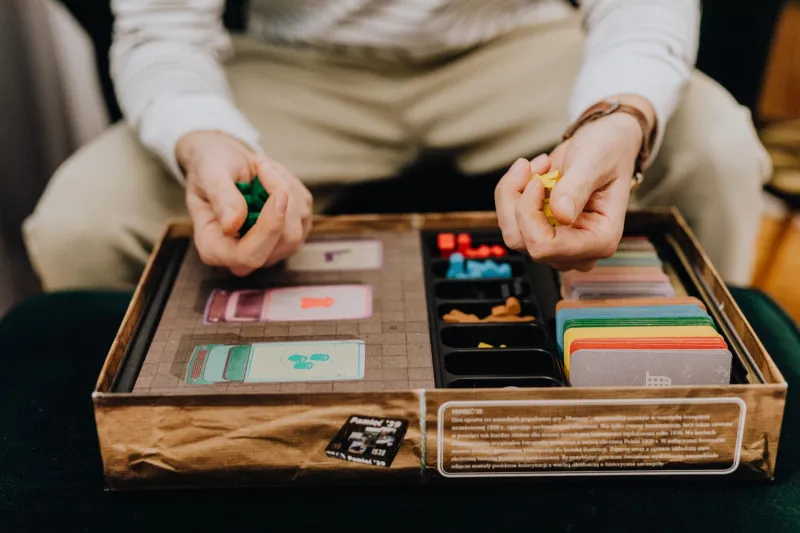
It is a rainy Saturday in November, the sort of day when the sky looks like a permanently loading screen, and I am sitting in an independent board game café in a converted shop unit on the edge of a town centre. There are twelve tables, a wall of games, a coffee machine that is doing its best, and a sign by the till that says: 'Please don't eat the meeples.'
I am here because everyone keeps telling me that board game cafés are having a moment. Not in a breathless, venture-capital way. In a quiet, steady, this-place-is-full-on-a-Wednesday way. In 2026, the board game café has become the new local for people who want to socialise without shouting over a pub, and I wanted to see what that actually feels like.
The New Local, Without the Shouting
The owner is Nadia, who opened the café three years ago after running game nights in a function room above a chippy. She tells me the idea was simple: 'I wanted somewhere you could go on your own or with two friends and not feel like you had to perform. Pubs are brilliant, but they are loud. Cinemas are brilliant, but you can't talk. Here, you can talk, but you have something to talk about.'
That is the thing. The games are not the point. The games are the icebreaker. They give a table something to do with their hands and their eyes. You are not just staring at each other across a pint, trying to think of a story. You are building a railway, or bluffing about a card, or trying to remember whether you have already said the word 'banana'.
A Table of Strangers
Halfway through the afternoon, the café runs a 'table for six' session for people who have come alone. A staff member called Tom picks a game, explains the rules in under five minutes, and then retreats. The table is a mix of regulars and first-timers: a nurse on her day off, a retired teacher, two students, and a man who says he is 'between hobbies'.
They start with Just One, a cooperative word game that is almost impossible to be bad at. Within ten minutes, the table is laughing at a clue that made sense to exactly one person. By the time they move on to Sushi Go!, they are arguing about whether to take the pudding card. It is gentle, daft and strangely moving. Nobody is performing. Nobody is on their phone.
The Games That Save a Table of Strangers
If you are going to a board game café with people you do not know well, the choice of game matters more than the coffee. Here is a practical list, tested on real tables and real awkward silences.
- Just One — cooperative, quick, and almost impossible to fail. You write clues for a mystery word, but duplicate clues cancel out. It gets people laughing at their own logic.
- Codenames — teams, words, and a lot of 'why would you say that?' It works best with four or more, and it gives shy people a role.
- Sushi Go! — a card-drafting game that takes ten minutes to learn and twenty to play. The pudding cards are the great equaliser.
- Ticket to Ride — the classic gateway game. Build trains, claim routes, quietly seethe when someone takes Edinburgh. It is satisfying in a way that is hard to explain.
- Azul — pretty tiles, simple rules, surprisingly mean. Good for people who like a bit of strategy but not a rulebook the size of a novel.
- Skull — bluffing, betting and a tiny bit of chaos. It is the closest a board game gets to a pub game without the sticky table.
- For Sale — bidding on houses and then selling them. It is funny, fast, and it makes everyone feel slightly ruthless.
- 6 Nimmt! — a number game that is basically a gentle riot. You will lose, and you will not mind.
What these games have in common is that they do not require anyone to be 'good at board games'. They require a table, a bit of attention and the willingness to look silly.
The Economics of a Rainy Afternoon
The café charges a £5 cover per person for unlimited games, plus whatever you spend on coffee and cake. That is not free, but it is not a fortune either. A family of four can spend a rainy Saturday afternoon there for less than a trip to the cinema, and nobody has to sit in silence next to a stranger who is rustling a bag of Minstrels.
Nadia says the model only works if people stay. 'We are not a restaurant with games. We are a living room with a game library. The cover charge means you can sit for three hours and not feel guilty. The coffee is decent. The cake is from a local baker. That is the whole business.'
Why It Works in 2026
We are, as a country, still figuring out how to go out without spending £80. Pubs are closing, tickets are expensive, and the sofa is always whispering. The board game café is not a solution to all of that. But it is a genuinely good third place: not home, not work, not a pub, not a cinema. A room where the point is to be together, with a rulebook and a mug of something warm.
I left on Saturday with wet shoes, a new favourite game and the phone number of the nurse, who is starting a Sunday afternoon Codenames group. That is more than I have got from a rainy Saturday in a long time.