Pennies, Pushers and the Price of a Good Afternoon by the Sea
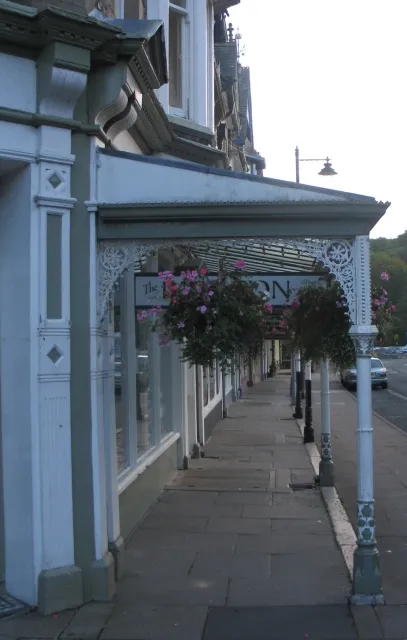
Photo: Ian Petticrew, CC BY-SA 2.0, via Wikimedia Commons
A tenner by the sea
The rain came in sideways off the promenade, so the arcade did what it always does: it swallowed a few dozen families and turned the volume up. I paid £10 at the change machine, got a plastic cup of copper and a paper strip of tickets, and settled in for the afternoon. In 2026, that is roughly the price of a cinema ticket and a small popcorn, or a month and a bit of a streaming subscription. It is also, if you choose the right machines, about two hours of something increasingly rare: a room full of people playing the same daft game at the same time.
Seaside arcades have always been a bit of a con and a bit of a gift. The carpet is loud, the lights are louder, and the prizes are the sort of plastic that breaks before you get it home. But the economics of the place are more interesting than the nostalgia suggests. This is not just a museum of the pre-cashless world. It is a working family business, with electricity bills, staff rotas and a very specific idea of what a good afternoon costs.
The two-pence economy
The 2p pusher is not a slot machine in the way your auntie means it. It is a slow-motion avalanche. You feed coins onto a moving shelf, the shelf pushes them towards a lip, and every so often a little cascade of copper falls into the tray. The machine does not care about you. The machine cares about gravity and the precise angle of the shelf.
And yet it is brilliant. A £5 note becomes a cup of shrapnel. You can play for ages because the unit of currency is almost worthless. The house edge is baked in, of course. The pushers are not charities, and the arcade is not there to break even. But the pleasure is not really the payout. It is the noise, the tiny cliffhanger, the shared leaning and swearing when a stack of 2ps wobbles and then refuses to fall.
This is the bit that a £70 console game struggles to match. A console asks for your attention in long, immersive stretches. A 2p pusher asks for a tenner and gives you forty-five minutes of low-stakes drama. It is cheap because it is physical, finite and slightly ridiculous. You cannot download more coppers at midnight. You have to go back to the change machine.
The claw and the near miss
Claw machines are the arcade's great con and its great joy. A good claw is set to just lose. It picks up the soft toy, lifts it six inches, gives the toy a little shrug, and drops it back on the pile. Everyone groans. Everyone watches the next person have a go. Occasionally, someone wins something enormous and the whole room turns to look.
The man with the keyring was doing his rounds while I was there. He opened the back of a machine, reset a prize that had slipped, and gave the joystick a test. He told me the claw is not really about strength. It is about the drop, the angle and the way the prize is sitting. He has been doing this for years. He said the worst thing is not the punters who lose. It is the punters who win a giant bear and then realise they have to carry it round town in the rain.
That is the seaside arcade in a sentence: joy with a small logistical consequence.
Paper tickets, plastic tat, real delight
The prize counter is where the whole thing becomes visible. You cash in your paper tickets for a yo-yo, a bouncy ball, a set of novelty glasses or, if you have been very committed, a radio-controlled car that will probably last until Tuesday. The staff behind the counter are patient in a way that suggests they have seen every possible ticket negotiation.
I watched a boy of about eight spend ten minutes deciding between a whoopee cushion and a small plastic dinosaur. He had 312 tickets. The dinosaur was 300. The whoopee cushion was 350. He went for the dinosaur, then immediately asked if he could have the whoopee cushion for his birthday. The woman behind the counter said she would see what she could do. It was the most human exchange I saw all day.
The prize counter is also a quiet lesson in value. The tat is not the point. The point is the transaction: you did a thing, you collected the evidence, and now you get to choose. In a cashless, app-based world, that is oddly satisfying. The paper ticket is a physical record of a small achievement.
Who pays for the lights
The manager, who asked me not to name the town, said the arcade is busier than it was five years ago, but the margins are tighter. Electricity is the big one. The machines are old, the parts are harder to find, and every card reader on the change machines takes a slice. The 2p pushers are not the profit centre. They are the atmosphere. The real money is in the change machine, the claw machines and the families who buy a round of hot chocolates while they wait for the rain to pass.
He said the cashless shift has been strange. Some machines now take cards, but the 2p pushers still need coins. The arcade has become a place where you learn to convert digital money into physical money, then back again. It is a small, slightly absurd loop, but it works. The paper ticket survives because people like it. The copper survives because the machines need it.
What the tenner buys
By the time I left, the rain had stopped and the promenade was full of people eating chips out of paper. I had spent £10 and won a small plastic frog, a paper ticket stub and the feeling that I had been somewhere. Not somewhere profound. Just somewhere real.
The seaside arcade is not a solution to the cost-of-living crisis or the loneliness epidemic or the fact that teenagers mostly socialise through screens. It is a room with some noisy machines in it. But in 2026, a room with some noisy machines in it is not nothing. It is a place where a tenner still buys an afternoon, where the prize is rubbish and the point is the playing.