The Secret Life of a Charity Shop Bookshelf
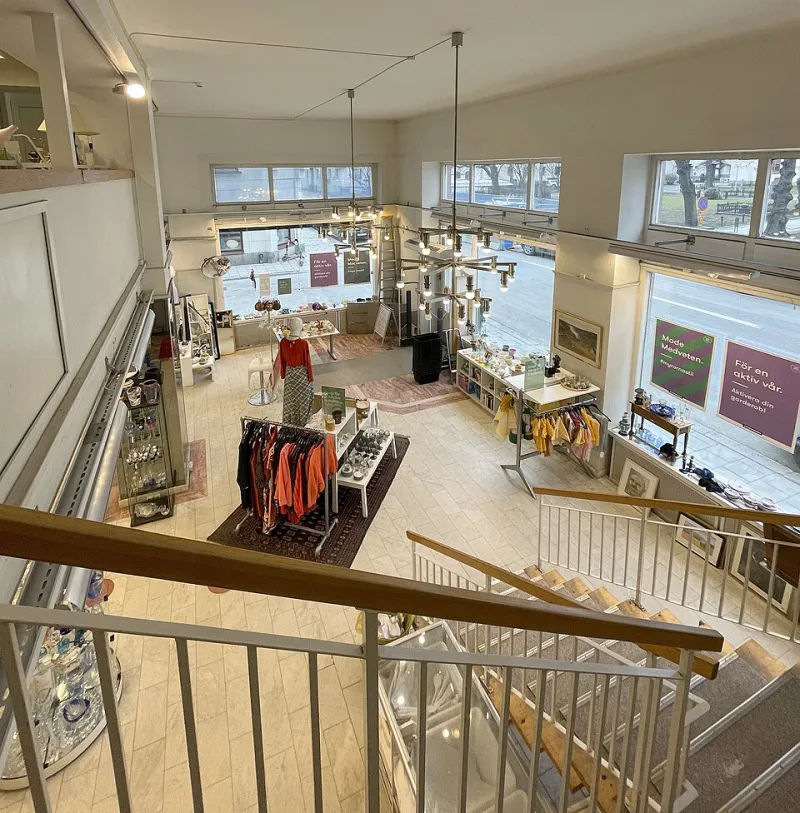
Photo: Officialworks, CC BY-SA 4.0, via Wikimedia Commons
There is a particular smell to a charity shop bookshelf. Old paper, faintly damp carpet, and the ghost of someone else's lavender drawer liner. It is not a glamorous smell, but it is a honest one. You walk in for a picture frame and leave twenty minutes later with a 1978 paperback of The Hitchhiker's Guide, a cookery book from a supermarket that no longer exists, and a faint sense that you have been rummaging through somebody's attic without asking.
I have spent a lot of 2026 doing this. Not intentionally. It started with a wet Saturday in a market town where the only dry place was a charity shop with a bookshelf wedged between the bric-a-brac and the winter coats. I bought three books for £4.50 and have been chasing that feeling ever since.
The Pencilled Dedication Economy
The first thing you notice is the inscriptions. To Margaret, Christmas 1989, with love from Auntie Jean. For Tom on his retirement — now you'll have time to read it. Happy birthday, love, don't lose this one. There is an entire emotional economy written in pencil on the inside covers of donated books, and it is almost always more interesting than the first chapter.
I found a copy of a wartime memoir last month with a dedication that simply said: Read this and remember why we bothered. No name. No date. Just that. I bought it for £1.50 and have not stopped thinking about it. Who was the reader? Did they bother? Did someone else donate it because they couldn't face it anymore? The book itself was fine. The inscription was the story.
Charity shop books are full of these small interruptions. A shopping list on the back of a receipt. A phone number with no name. A child's crayon drawing pressed flat between pages 112 and 113. They are the literary equivalent of finding someone's holiday photos in a drawer — not yours, but you look anyway.
What Gets Donated, and Where
There is a regional grammar to charity shop bookshelves. In seaside towns you get a lot of sailing manuals, paperback thrillers with sand in the spine, and memoirs by people who ran a guesthouse in the 1970s. In cathedral cities the shelves lean towards local history, gardening, and slim volumes of poetry that look like they were bought as a present and never opened. In London you get celebrity cookbooks and corporate self-help with the dust jackets missing. In the North East I once found four copies of the same Catherine Cookson novel, all donated separately, like a quiet consensus.
The £1.50 price tag is part of the magic. It is low enough to take a risk. You can buy a book you would never borrow from a library — a tatty sci-fi omnibus, a 1980s diet manual, a biography of a politician you vaguely remember — because the stakes are basically nil. At £1.50 the book is not a commitment. It is a lottery ticket with pages.
And the books themselves are often in that perfect middle condition: read enough to be broken in, not so ruined that the pages fall out. A charity shop paperback has usually been on a shelf, in a bag, on a bus, and back again. It has a patina. New books smell of promise. Charity shop books smell of other people's lives.
The Bus Ticket in Chapter Seven
My favourite find this year was a 1990s bus ticket used as a bookmark in a second-hand copy of Birdsong. The ticket was for a route I didn't recognise, dated a Tuesday in November, and had been clipped at both ends. It told me nothing and everything. Someone had been reading that book on a bus in the rain, probably going to work, probably not enjoying it as much as they'd hoped. They'd finished it or given up somewhere around chapter seven and left the ticket behind. The book came to me thirty years later for £1.50.
That is the thing about charity shop bookshelves. They are not curated. They are accumulated. Nobody has chosen these books to sit together. They have arrived in bin bags and carrier bags, been sorted by volunteers with other things to do, and shelved in whatever order seemed sensible at the time. The result is a kind of accidental portrait of a town's reading habits, complete with guilty pleasures and unfinished projects.
Why We Still Browse
We browse because it is cheap, yes. But also because it is slow. There is no algorithm on a charity shop shelf. No 'customers also bought'. No recommendation engine nudging you towards the latest thing. There is just a shelf, a slightly wobbly table, and the possibility of finding something you didn't know you wanted.
In a year when streaming menus have become exhausting and bookshops are lovely but expensive, the charity shop bookshelf feels like a small act of resistance. It is thrift as entertainment. It is nostalgia without the subscription fee. And it is a reminder that most books have a life beyond their first reader — passed on, forgotten, rediscovered, and sold for £1.50 to someone who will wonder about the bus ticket in chapter seven.
I still haven't read the wartime memoir. I will. But for now it is enough to know it is on my shelf, with its pencilled instruction, waiting to be bothered about again.