Forty Seats, One Radiator and a £12 Ticket: The Case for Going Upstairs
Photo: John Hanrahan Publishing Company, Inc., photograph by Norman Taylor, Public domain, via Wikimedia Commons
The pub downstairs is doing its Friday thing. Two blokes are arguing about the football. A dog is asleep under a table. The fruit machine is playing its little carnival tune to nobody in particular. Then you go up a narrow staircase, push through a black curtain, and find yourself in a room with forty chairs, a lighting rig that looks like it was built by someone who really cares and a radiator that clanks every time a train goes past.
This is pub theatre. Not a pub with a stage in the corner. A proper little theatre, usually upstairs, usually with a licence, usually run by people who are not doing it for the money. In 2026 it is quietly having a boom. Tickets are £12. The room is full. The play is new. And the whole thing feels more alive than a lot of places with chandeliers.
The room above the saloon bar
The theatre I visit is in the Midlands, above a pub that has been on the same corner since the 1930s. I am not naming it because the company is mid-run and the landlord is already dealing with a blocked drain. The artistic director, a woman in her thirties called Ruth, meets me by the bar. She is carrying a prop lamp and a roll of gaffer tape. 'We share the building with the pub,' she says. 'That means we share the toilets, the fire exit and the occasional Sunday roast. It also means we have a landlord who actually wants us here. That is not a small thing.'
The room seats 42, or 38 if the cast needs more wing space. The stage is a raised platform. The black curtain is the back wall. The lighting desk is a laptop and a small board. The dressing room is a corridor with a mirror and a rail. The radiator is the only source of heat and the only source of comedy. During the first half, it clanks three times. The actors do not flinch. The audience does not laugh. It is just the building, doing its thing.
Rehearsing beside the fruit machines
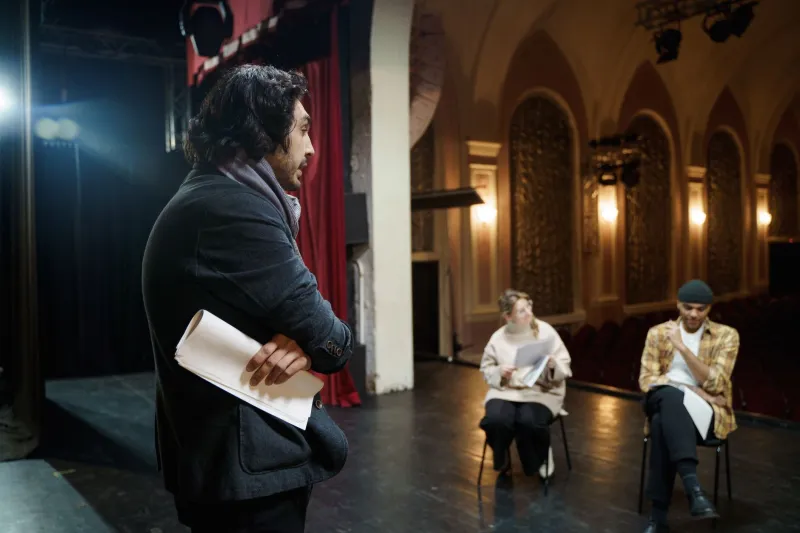
Earlier that afternoon, the company rehearsed while the pub was quiet. The fruit machine was off. The jukebox was off. The only sounds were dialogue, footsteps and the occasional shout from the cellar. Ruth says that is normal. 'We rehearse around the pub's timetable. We can't be loud before opening. We can't be loud during the quiz. We have a window between 2pm and 5pm when the building is ours. You learn to work fast.'
The company is a new-writing outfit. They programme four shows a year: two new plays, one revival, one scratch night. The budget is small. The actors are paid a profit share, which in a good week means £200 each. In a bad week it means £40 and a free pint. The ticket price is £12, or £9 concessions. The pub takes a cut of the bar. The theatre takes the box office. It is not a business model that would impress an investor. It is a business model that keeps the lights on.
'People think pub theatre is a stepping stone,' Ruth says. 'It is not. It is a room. It is a place where you can do a play that would never get programmed in a big house because it has five characters and no interval and a scene that requires a real chip pan. That is not a limitation. That is the point.'
A £12 ticket and a £4 pint
On Friday night, the audience is a mix. There are two couples in their fifties, a group of students, a man on his own with a notebook, and a woman who says she comes every month because it is cheaper than the cinema and the acting is better. She is not wrong. The play is a two-hander about a brother and sister clearing out their mother's house. It is funny and sad and specific. The radiator clanks at the worst possible moment. Nobody minds.
At the interval, everyone goes downstairs. The pub is now full. The fruit machine is on. The dog is awake. People are standing in the saloon bar with plastic cups of wine and pints of bitter, talking about the play. It is the most natural thing in the world. The theatre and the pub are not separate. They are the same building, the same night, the same audience.
That is the economic argument for pub theatre, and it is also the artistic one. The overheads are low. The risk is low. The ticket price is low. A company can try something strange and not lose the house. A writer can hear an audience laugh at a line and know it works. An actor can play a role that is too small for a main stage but too good to turn down. The room is small enough to fail. That is why it succeeds.
Why the black curtain matters
There is a version of this story that sounds like nostalgia: the plucky little theatre above the pub, keeping the flame alive. That is not what I saw. I saw a room that was full on a Friday night in 2026, with a new play, a paying audience and a company that knew exactly what it was doing. The black curtain was not a shameful compromise. It was a frame.
The pub theatre boom is not about rescuing an old form. It is about using a room that already exists. The pub has the licence, the toilets, the bar and the passing trade. The theatre has the story. Put them together and you get a night out that costs less than a cinema ticket and a popcorn, and feels like you have been somewhere. You go downstairs afterwards and the dog is still there. The fruit machine is still playing. The play is still in your head.
As I leave, Ruth is counting the takings on a corner table. The radiator has gone quiet. The black curtain is drawn. The pub is still loud. Upstairs, the room is empty and waiting for tomorrow. Forty seats. One radiator. A £12 ticket. It is not a lot. It is enough.