The Demon King in a Hoodie: How Regional Panto Got Braver Than the West End
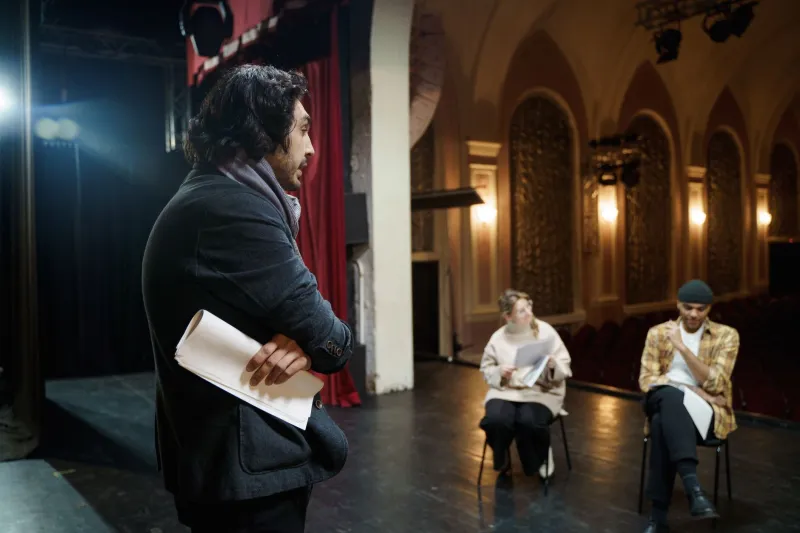
The rehearsal room is above a shopping centre, and you can hear the tannoy from the car park through the fire door. There's rosin on the floor, instant coffee in a chipped mug, and a woman in a sequinned boot explaining to a man dressed as a cow that he needs to hold the pause two beats longer or the joke dies.
It is early November, and this is where the 2026 pantomime season is actually being built.
I've spent the last few weeks dropping into regional venues — a 380-seater in West Yorkshire, an old corn exchange, a theatre with a stage so steep the back row can see the actors' shoelaces — and I've come away convinced that the most inventive entertainment in Britain this winter isn't happening where the press nights are.
The budget line that isn't a joke
Nobody in regional panto has money, and that is precisely the point.
A designer I spoke to, Femi, has built a cave, a castle and a ship out of what he cheerfully calls "plywood, paint and one very good idea." When you can't buy spectacle, you have to invent it. His dragon this year is a hooded figure with a torch and a voice from the wings, and I promise you it is more frightening than anything I've seen lowered from a fly tower on a seven-figure budget.
Scarcity forces decisions. A big show can paper over a weak second half with a set change and a smoke machine. A small one can't. If the script sags, everyone in the room knows it, including the woman on the door who has watched it forty times.
Jokes with a postcode
The best writing I've heard this season is genuinely local without being smug about it. Dawn, who has written her venue's show for six years, keeps a notebook of things people in the town actually say — the bus route that never turns up, the roundabout everyone complains about, the specific way the local paper reports on a lost sheep.
"You get one free local reference," she told me. "After that you're just doing a list. The audience wants to feel recognised, not lectured about where they live."
That's a harder trick than it sounds. The cheap version is name-checking the bypass and waiting for the laugh. The good version is building a running gag that only makes sense if you've queued at that post office — and then letting the outsider characters be baffled by it.
Casting that raises eyebrows, in a good way
Regional panto has always done something the West End can't: it casts from the room in front of it. I've seen a Dame played by a local stand-up who normally works to thirty people in a back room, a Principal Boy who is a genuinely brilliant physical comedian, and a chorus full of teenagers from a Saturday theatre school who are, frankly, the hardest-working people in the building.
There are risks in that. A name from the telly puts bums on seats, and some venues will stretch a budget to get one, sometimes at the expense of the ensemble. When it works — when the celebrity is a good sport and the company around them is strong — the show lifts. When it doesn't, you get a very expensive person standing slightly to one side of the action.
Where it goes wrong
Let's be honest, because affection isn't the same as blindness.
Some regional pantos are coasting. I saw one this month that was still using gags older than most of the audience, delivered with an energy that suggested the script had been photocopied since the nineties. Another had a beautiful set but a sound mix so muddy that half the rhyming couplets vanished into the flies. And there's a particular crime I'll name plainly: the second half that forgets it has a plot.
Traditions can be a shelter for laziness. "We've always done it this way" is not a creative choice, it's an excuse. The shows that work are the ones that treat the form as a set of tools rather than a set of rules.
The bit the nationals never review
Here's what I keep coming back to. A regional panto might play to twenty thousand people across six weeks, many of whom will not set foot in a theatre again until next December. For a lot of children in that audience, this is theatre — the first and possibly only live show they'll see all year.
Karen, who runs front of house at one venue, told me she can tell how the show is going by the noise in the interval. "If they're still laughing about something from the first half while they're queuing for an ice cream, we've got them. If they're quiet, we haven't."
That's a sharper critical test than most reviews manage.
So yes, the West End will get the column inches, the celebrity interviews and the four-star write-ups. But the shows taking the real swings this season — new jokes, strange casting, homemade dragons and all — are the ones a bus ride away, in rooms where the audience can hear the tannoy from the car park.
Go and see one. Take a child, or a sceptical adult. Just don't sit near the front if the Demon King is in a hoodie.