Nine Millimetres and a Slight Disagreement: Breakfast With the Village Sky-Watcher
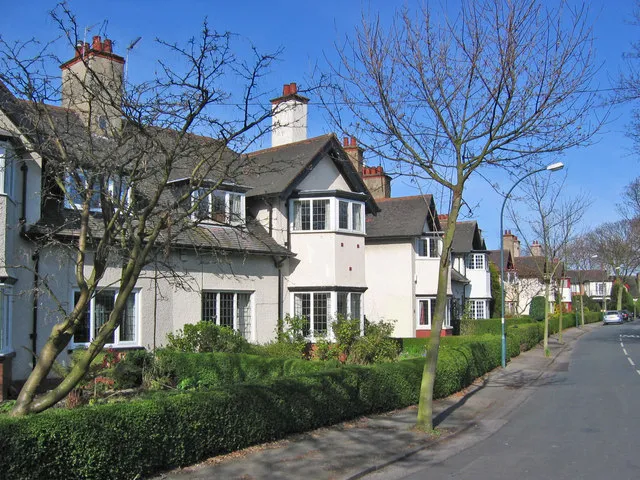
Photo: Stephen Horncastle, CC BY-SA 2.0, via Wikimedia Commons
The first thing Alan does is look at the rhubarb. Not because he is planning a crumble, but because the rain gauge lives behind it, tucked between the compost bin and a fence that has been meaning to fall down since about 2019. On a cold Saturday morning in November 2026, with the grass stiff underfoot and the village still deciding whether to wake up, he lifts the inner tube out of the gauge, reads the level, and says: “Nine. Maybe nine and a half. We’ll call it nine.”
This is not idle pottering. Alan is one of those people who measure the weather properly — not by sticking a hand out of the back door and pronouncing it “a bit damp”, but with a funnel, a measuring cylinder, a maximum-minimum thermometer and a notebook that has seen better days. His readings go into a ledger, then onto a laptop, then into the wider pool of observations used by forecasters, researchers and anyone who wants to know what the sky actually did in a particular square of the country. In an age when a phone can tell you the temperature in Tokyo before you have found your slippers, there is still something quietly stubborn about a man in a fleece checking a plastic tube behind the rhubarb.
The gauge behind the rhubarb
The setup is not glamorous. There is a wooden post, a white plastic gauge, a small Stevenson screen that looks like a rabbit hutch for very tidy rabbits, and a path worn into the grass by roughly four thousand morning trips. Alan’s wife has views about the rhubarb. Alan has views about the placement of the gauge. These views do not always align.
“She says it’s too close to the fence,” he tells me, tapping the notebook. “I say the fence gives it a bit of shelter, and anyway, it’s been there since 1998. You don’t move a rain gauge on a whim. You’d have to start again. All the comparisons would be nonsense.”
This is the kind of sentence that sounds absurd until you realise it is the whole point. Weather records are not just numbers; they are numbers in a place. A reading is only useful if you know where it came from, how high it sits, what is nearby and whether somebody moved the blasted thing last spring because it was in the way of a new shed. Alan’s records go back to the late 1990s. The handwriting changes, the pens change, the laptop arrives in 2012 — but the routine does not.
A ledger, a funnel and the morning ritual
The morning check takes about ten minutes, or forty if you ask questions. Gauge first. Then the thermometer screen. Then a look at the cloud, the wind and anything else worth noting: frost on the car roof, a bit of ice in the bird bath, the first proper gust that makes the conifer lean like it has heard some bad news. Alan writes it down in pencil, then transfers it to a spreadsheet with the careful air of a man who does not entirely trust computers but has accepted that they are here to stay.
“People think it’s all automatic now,” he says. “And a lot of it is. There are stations everywhere. But automatic gauges can get clogged, or freeze, or record a spider. You still need somebody to look at the ground and say, ‘That’s not right.’”
He shows me a page from January 2010, when the village had a proper cold snap. The ink is neat and slightly cramped. There is a note in the margin: “pipe frozen — used kettle water — don’t tell health and safety.” It is the most human weather record I have ever seen.
What counts as proper rain
If you want to start an argument in this village, do not mention the bypass. Mention drizzle. Alan has a neighbour who maintains that anything under two millimetres does not count as rain. Alan disagrees, forcefully but politely, in the way of a man who has spent decades defending the honour of light precipitation.
“Drizzle is rain,” he says. “It’s just rain that hasn’t got its act together. If you ignore it, you end up with a dry month that wasn’t dry at all. The ground knows. The rhubarb knows.”
There is also the matter of “proper rain” versus “weather”. A heavy shower at four in the morning counts, even if nobody saw it. A damp afternoon that never quite gets going still goes in the book. The only thing Alan will not tolerate is guesswork. He has a neighbour who once reported “about an inch” from memory. Alan still brings it up at Christmas.
Why a garden still matters in 2026
It would be easy to file all this under “nice but pointless”. It is neither. In 2026, with app-based forecasts, hyperlocal models and enough data to fill several warehouses, a single garden gauge can look like a museum piece. But the official weather network is not built only from satellites and airport stations. It is built from thousands of small observations — some automatic, some human — that fill in the gaps between the big dots. A village in a valley, a frost pocket behind a hedge, a street that always floods by the Co-op: these things matter, and they are exactly the things a garden gauge can catch.
Alan is not a meteorologist. He is a retired surveyor with a good eye and a low tolerance for sloppiness. But his records have been used by local researchers, quoted in a parish newsletter, and once — thrillingly — mentioned in a conversation with somebody from the Met Office’s Weather Observations Website. He is still slightly smug about that.
The quiet arithmetic of a village
By half past nine, the kettle has boiled twice and the frost is turning to slush. Alan logs the morning’s figures, closes the notebook and gives the rhubarb a look that suggests it has done well this year. Nine millimetres is not dramatic. It will not make the news. But it is a fact, written down in a village, by somebody who bothered to go outside.
“People ask why I still do it,” he says. “I suppose it’s because the weather is the one thing we all share. You can argue about the council, the parking and whether the pub has gone downhill. But the rain falls on everybody. Somebody might as well write it down.”
Then he goes in for a second cup of tea, leaving the gauge behind the rhubarb to do its quiet work until tomorrow.