The Tiny Village That Gets Repainted After Tea: A Shift With the Model Village Fixer
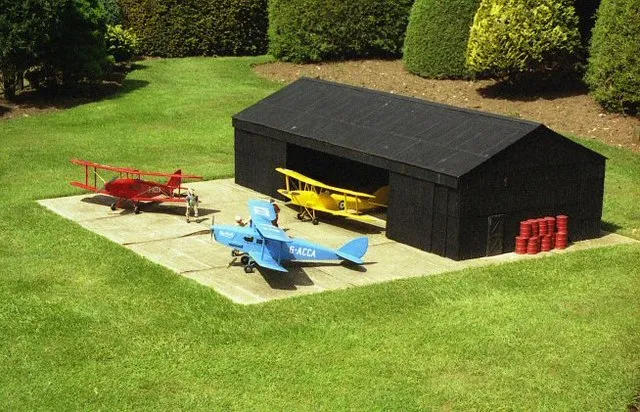
Photo: John Firth, CC BY-SA 2.0, via Wikimedia Commons
The last family of the day shuffles out through the gift shop at twenty past four, a bucket and spade clattering against the doorframe. The woman on the till counts a few notes, the gate is pulled to, and for about thirty seconds the model village is just a very quiet garden with some unusually small houses in it. Then a shed door opens, a kettle clicks on, and the real shift begins.
I had been invited to stay behind by Ray, who has looked after the plants here for longer than he cares to say. 'People think it's all fairy lights and little trains,' he tells me, handing over a mug with a chip in the rim. 'It's mostly moss and deadheading. Same as your garden at home, only you have to do it with your knees together and a pair of tweezers.'
The Last Bucket and Spade Leaves
We start at the miniature bandstand, where a family of tiny brass figures are arranged as if mid-tune. One of them has lost an arm. Not vandalism, Ray assures me — a seagull, probably, or the wind off the front during that blowy week in March. 'We keep a box of spare limbs,' he says, as if this is the most ordinary sentence in the world. 'Bit morbid, I know. But you can't just leave a trombonist with a stump.'
The village itself is a funny old thing: a cluster of cottages, a church, a pub called The Jolly Fisherman, a harbour with water that turns over on a timer, and a main street so narrow that a single dandelion can look like a triffid. Ray walks me round the perimeter first, checking the hedges. Not the proper hedges — the miniature ones, box and privet clipped to a height of about six inches. 'The trick is not to let them get leggy,' he says, running a thumb along a tiny roofline. 'Once they go, you've got a topiary problem on your hands. And nobody wants a topiary problem.'
A Hedge the Height of a Matchbox
There is, I realise, a whole vocabulary here that I have never needed before. 'Scaled planting' is one. 'Weathering' is another. Ray points out a patch of moss on a model roof that he has been encouraging rather than scraping off, because it makes the tiles look older. He has opinions about gravel. He has a small pair of shears that look like something a dentist might use. He tells me that the biggest nuisance is not the visitors but the weeds — specifically, willowherb and bittercress, which can go from seed to six inches in what feels like an afternoon. 'You turn your back and there's a forest where the village green used to be,' he says. 'It's like Jurassic Park, but with more tea breaks.'
We stop by the little pond, where a model swan has developed a lean. Ray straightens it with one finger. 'That'll be the heron,' he says. 'Not the real one. The model one. Someone knocked it last week and it's never been right since.' He pauses. 'Actually, it might have been me.'
The Paint Pot With a Lid the Size of a Thimble
Inside the workshop, which smells of creosote and rich tea biscuits, Paul is repainting a window box. Paul is the painter, which sounds grand until you see the brush he is using. It has about four bristles. 'I bought it from a model shop in a market town,' he says. 'The woman behind the counter asked if I was doing dolls' houses. I said, 'Something like that.'' He is touching up the green on a miniature bench, and he has been doing it for twenty minutes. 'You can't rush it,' he says. 'If you rush it, you get drips. And a drip at this scale looks like a burst water main.'
The workshop is full of half-finished things: a tiny postbox, a set of railings, a figure of a man with a dog that has been waiting for a new coat of paint since August. There is a shelf of jam jars containing screws the size of rice grains and a drawer marked 'WINDOWS — FRAGILE'. Paul tells me that the hardest jobs are the ones nobody notices. 'You can spend a whole day repainting the front of the church and not one person will say a word,' he says. 'But if you paint a door the wrong shade of blue, you'll get three letters by Friday.'
Weather, Weeds and the Visitor Who Never Looks Down
After tea, we do a circuit of the village. The drizzle has started, which means the model streets are slick and the little gutters are doing their job. Ray points out a hairline crack in a path that he will fill with a bit of mortar and a lot of patience. Paul stops to check a figure of a fisherman whose nose has faded in the sun. 'That's the thing about this place,' he says. 'It's not a museum. It's outside. It gets rained on. It gets baked. It gets seagulls.'
I ask whether it ever feels thankless. The visitors come for an hour, take a few photos, buy an ice cream, and go. They don't see the repainted bench or the straightened swan or the six-inch hedge that took a whole morning to get right. Ray shrugs. 'You don't do it for them,' he says. 'Well, you do. But you also do it because it's there. It's a little world. You want it to look decent.'
Tea, Tweezers and the Point of It All
By half five, the light has gone soft and the village looks almost real — or at least real enough that you could imagine living in it, if you didn't mind the ceiling being six inches above your head. Ray locks the shed. Paul rinses his brush. The kettle goes on again, because of course it does.
As I leave, I notice a family peering through the gate, hoping for one last look. Ray waves them in for a minute. They walk round the pond, point at the swan, and take a photo of the pub. They don't notice the new paint on the bench or the neatly clipped hedge or the tiny postbox that has been waiting all summer for its red. But that's all right. Ray is already making a note about the heron.