Before the Kick-Off There Is a Bucket of Sand: Sunday Morning at the Rec
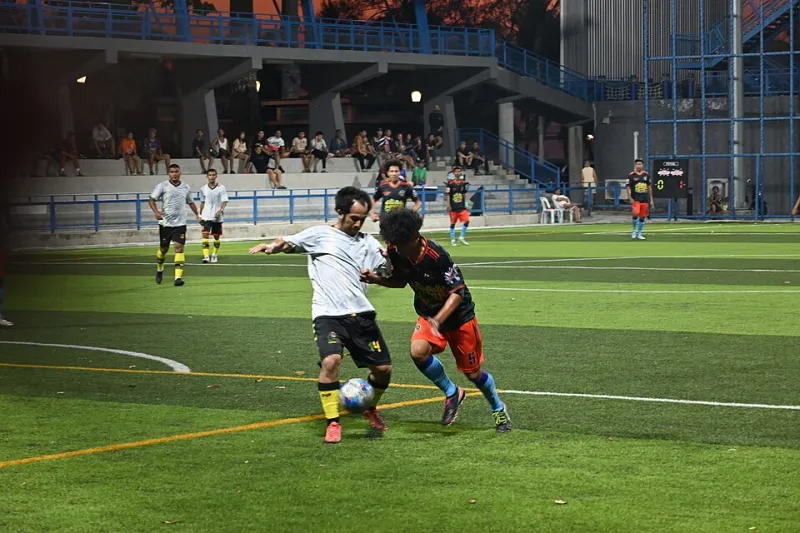
Photo: PattayaPatrol, CC BY-SA 4.0, via Wikimedia Commons
The match kicks off at half past ten. I arrive at five past nine, which is early for a spectator and late for the people who actually make the morning happen. By then, Mick has already been at the shed for twenty minutes, wrestling a net bag out from under a stack of corner flags and a tarpaulin that smells faintly of wet dog.
This is the part of Sunday football nobody puts on a poster. Before the warm-ups, before the shouts of 'man on', before the first dubious offside decision of the day, there is a small crew of people in coats doing unglamorous things with pegs and mallets. It is not a grand civic ceremony. It is closer to a very slow, very cold piece of amateur logistics, and it is oddly lovely.
The 8:40 Crew
Mick is the sort of man who owns three mallets and knows which one is for the good pegs. He has a system. The nets go up from the outside in, the corner flags go in last because otherwise someone will trip over them, and the bucket of sand by the shed is not to be moved. Nobody is entirely sure what the sand is for. It has been there every Sunday since 2019. It may be for the goalmouth puddles. It may be for weighing down the bin bags. It may simply be part of the rec's ecosystem now, like the bench with the missing slat or the dog bin that has been 'about to be replaced' for two years.
There is a quiet choreography to it. One volunteer holds the net; another feeds the peg through; a third says, 'Not that one, the longer one,' and then apologises for sounding sharp. The pitch is heavy from Friday's rain, and the white lines are more of a rumour than a boundary. A man called Terry walks the touchline with a bin bag and a resigned expression, picking up the cans and wrappers that appear overnight like mushrooms.
By ten o'clock, the goal frames are up, the flags are in, and the rec looks almost official. The first players start drifting in with kit bags over their shoulders and the universal expression of men who have remembered their boots but forgotten their shin pads.
The Tea Hatch Economy
At the side of the changing block, a gazebo has been erected with the sort of optimism that ignores weather forecasts. Underneath it is the tea hatch: an urn, a folding table, a stack of mugs, a tin of biscuits and a handwritten sign that reads, 'Tea 80p, Coffee £1, Bacon butty £2.50. Sorry, no card.'
This is the engine room of the morning. The queue starts forming before the players have finished their warm-up, and by half-time it is three deep. There is a woman called Sue who runs it with the efficiency of a headteacher and the warmth of somebody who has been feeding people in this car park for fifteen years. She knows who takes sugar, who is trying to give it up, and whose dog will sit patiently by the table in exchange for a corner of a bacon butty.
The flask is a separate matter. Flasks arrive tucked under arms like small diplomatic pouches. There is a hierarchy to them. The tall steel one is serious. The battered green one with the peeling sticker is sentimental. The tiny pink one is for a child who will drink half a cup of tea and then leave it on a wall. People bring their own because the tea hatch is for the crowd, but the flask is for the person who has planned ahead and does not trust the urn to be hot enough at 9:45.
The Referee and the Whistle
The referee turns up at quarter past ten looking like a man who has already had a long morning. He is not wearing the black kit of television fame. He is wearing black shorts, a black top, and a look that suggests he has refereed this exact fixture in his head on the drive over. He pats his pockets three times in the way that people do when they are checking for keys, wallet and phone. Then he pats them again, more slowly.
'Whistle,' he says, to nobody in particular.
There follows a search that involves the changing room, the boot of a car, the pocket of a coat that is not his, and the long grass behind the goal. The match is due to start. The players are doing that thing where they pretend not to notice. A dog walker called Pauline, who has stopped to watch because her spaniel has decided this is the best thing on television, asks what has happened. When she hears, she rummages in her coat and produces a small plastic whistle. She used to teach netball, she explains. She keeps it for emergencies.
The referee blows it experimentally. It makes a thin, slightly apologetic sound. He looks at it, looks at the players, and decides that dignity is more important than decibels. Play begins. The whistle is returned at full-time with a solemn thank you, and Pauline says she will bring a better one next week, just in case.
A Temporary Crowd
The crowd is never quite the same twice. There are the regulars: the parents who stand in a loose huddle with their hands in their pockets, the grandparents who bring folding chairs and a blanket, the man who always arrives ten minutes late and asks what he has missed. There are the passers-by: a cyclist who slows down to watch a corner, a woman with a shopping bag who stops for twenty minutes and leaves before the final whistle, two teenagers on bikes who pretend they are not interested and then stay for the whole second half.
There are dogs. There are always dogs. A small terrier called Dennis spends most of the first half trying to join in and the second half asleep under a folding chair. The crowd swells to perhaps thirty-five people, including dogs, and then shrinks again when the rain starts. Applause is polite. Heckling is gentle. Somebody shouts, 'Get it in the mixer,' and somebody else laughs, and it is not clear whether this is a joke or a genuine tactical instruction.
The folding chair is its own character. It has a cup holder, a slightly bent leg, and a tendency to sink into the soft ground at the corner of the pitch. By the second half, it is leaning at an angle that suggests it has had a long week. Its owner, a man called Ray, does not seem to mind. He has a flask, a blanket over his knees, and the air of somebody who has found the best seat in the house by refusing to accept that there is a house at all.
Half-Time and the Long Walk Back
Half-time is the social peak. The tea hatch does a brisk trade. The players stand in little groups, breathing hard, saying things like 'we're still in this' and 'just keep it simple'. The referee drinks a cup of tea and looks at the sky. The dogs rearrange themselves. Somebody's dad produces a bag of oranges that nobody asked for and everybody takes one from anyway.
The second half is colder. The light goes flat. The game gets scrappier. The borrowed whistle gets a good workout. And then, at ten past twelve, it is over. There are handshakes, a few half-hearted complaints about the offside, and the slow dispersal of people back to cars, buses and Sunday lunches.
The nets come down. The flags come out. The bucket of sand stays where it is, waiting for next week. Mick folds the tarpaulin, Terry ties up the bin bag, and Sue starts counting the takings from the honesty tin. The rec returns to the dog walkers and the puddles and the quiet.
It is not the Premier League. It is not trying to be. It is a Sunday morning, a heavy pitch and a cup of tea from a gazebo. But as I walk home with cold ears and the faint smell of bacon, I think that this is what a weekly ritual actually looks like: unglamorous, repetitive, held together by people who bring a flask and a folding chair and a spare whistle, just in case.